Shopify product image size: 2048 px, angles, checklist
Shopify product image size: 2048×2048 px square is Shopify's pick. The size table, how many images a product holds, which angles to upload, and a checklist.
Product image size for Amazon, Shopify and Etsy in one dated table: pixels, ratio, formats, photo counts, and the one 2048 px square JPEG that fits all three.
Product image size is not one number. Amazon, Shopify and Etsy each state their own, and the guides that copy them disagree with the marketplaces' own pages. This post puts the three side by side in one table dated 2026-10-25, then gives the single file spec that fits all three, a 2048 × 2048 px square JPEG, with one exception for Amazon's white main image.
Key takeaways
Amazon asks for 500 to 10,000 px on the longest side, and more than 1,000 px on each side so shoppers can zoom. Shopify says a 2048 × 2048 px square usually displays best, and zoom needs more than 800 × 800. Etsy staff recommend 2000 px on the shortest side. Every figure below was checked on 2026-10-25.
| Amazon | Shopify | Etsy | |
|---|---|---|---|
| Size to aim for | No single target. 500–10,000 px on the longest side; over 1,000 px on each side for zoom | 2048 × 2048 px for a square image | At least 2000 px on the shortest side, 72 PPI |
| Zoom | Over 1,000 px on each side | Over 800 × 800 px | Not stated separately |
| Smallest and largest | 500 px and 10,000 px, longest side | No minimum stated; 5000 × 5000 px or 25 megapixels | First photo at least 635 px; no maximum found |
| Ratio | None stated on the page we read | Same ratio on every featured image; 1:1 for the 2048 figure | Shop Home shows a square crop; photos should "support both ratios" |
| Formats | JPEG (preferred), TIFF, PNG, non-animated GIF | PNG best, then JPEG; also TIFF, BMP, GIF, SVG, HEIC, WebP | JPG, GIF, PNG; a search result of the help text adds SVG and HEIC |
| File weight | None stated on the page we read | Under 20 MB; about 300 KB suggested | Images over 1 MB may not finish uploading (help text, via a search result) |
| Photos per listing | At least 1; at least 6 recommended | Up to 250 images, 3D models or videos | Up to 20 photos |
| Background | Main image: pure white, RGB 255, 255, 255; product fills 85% or more | None stated | None stated |
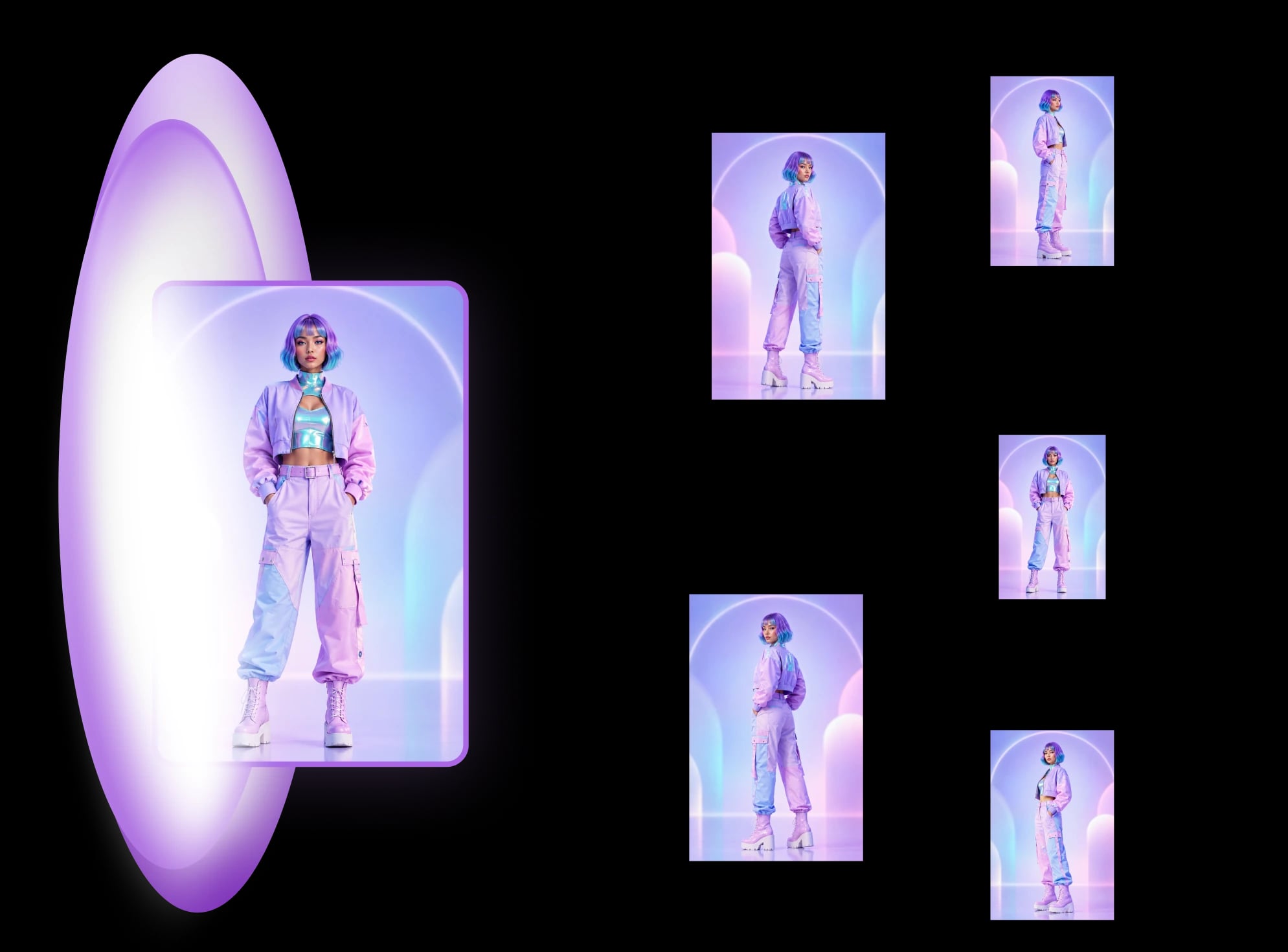
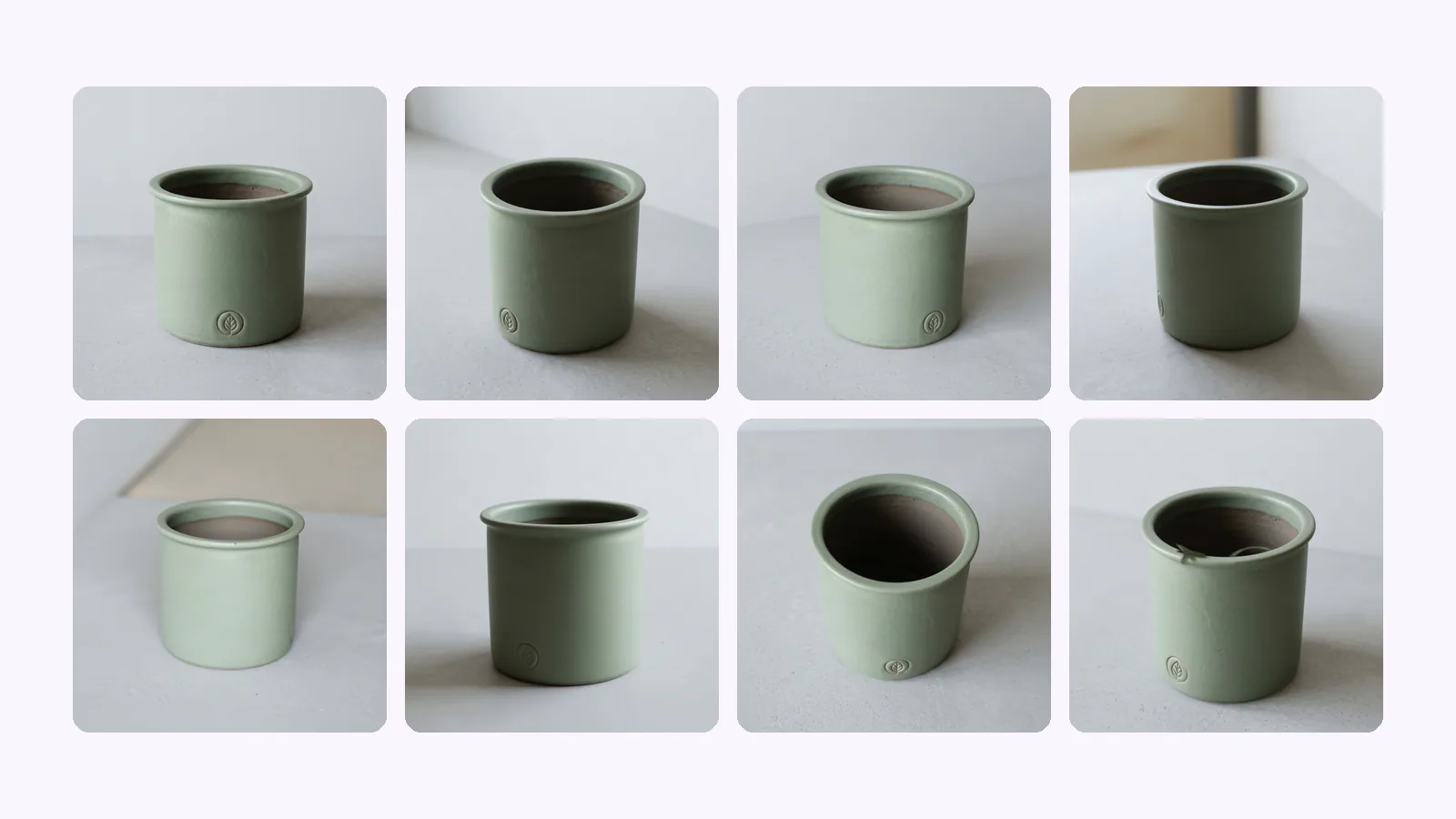
If you make these images from one product photo, make every angle of a product from one photo returns the standard views at the size your plan allows. The size section further down says how to check what you get.
The table uses the marketplaces' own pages and Etsy staff, not vendor guides. Vendor guides add figures the primary pages never state, and they contradict each other: one 2026 guide from an upscaling vendor still lists 10 photos per Etsy listing, while the Etsy help text in search results says 20 (checked 2026-10-25).
A square 2048 × 2048 px JPEG, with the product centred. It sits above Amazon's 1,000 px zoom line, matches Shopify's own 2048 × 2048 recommendation, clears Etsy's 2000 px shortest-side figure, and stays far below every stated ceiling. Make Amazon's white main image a separate file.
This is our spec, derived from the table, not a rule from any of the three. It turns three sets of files into one set plus one white main image.
JPEG is the one format all three accept. Shopify's help page puts PNG first and its blog recommends WebP, but Amazon's page and Etsy's staff post list neither as a preference. Pick JPEG for the shared set, and keep files light: Shopify suggests about 300 KB, and Etsy warns that images over 1 MB may not finish uploading.
Shopify's two pages disagree on the best format, so treat neither as final: test one product on your theme and look at the collection page and the zoom.
Yes, in three ways. Amazon has a background rule and category style guides, Shopify cares about a consistent ratio across featured images, and Etsy crops thumbnails. Size is the easy part: these differences are where listings get suppressed, resized or cut off.
Open the file's properties, confirm both sides, read the weight, and look at the thumbnail crop. For an Amazon main image, also read the background with a colour picker. A file that passes these five checks meets every number in the table, though not necessarily your category's rules.
The table is a snapshot of pages that change, and "recommended" is not "required". We uploaded nothing to any marketplace, so we cannot say what each one accepted, rejected or resized. Treat the numbers as a spec to test on one product first.
Upload one clear product photo to Product turnaround for the standard angles, and export PNG, JPEG or WebP. Then open each file, read its pixel size, and compare it with the spec above. The Amazon main image comes from a different tool: the Product photoshoot makes a pure-white JPEG, square, 1,000–2,000 px, cut out of your own photo, with the product filling about 87% of the frame. At its smallest that is right on Amazon's 1,000 px zoom line, and at its largest it is just under Shopify's 2048 px recommendation, so check the pixel size of each file you get.
Make every angle of a product from one photo
2048 × 2048 px. Shopify names that size, Etsy staff recommend at least 2000 px on the shortest side, and Amazon needs more than 1,000 px on each side for zoom. Keep Amazon's main image white and a separate file.
For Amazon it is the line itself: Amazon says "larger than 1,000 pixels", so 1000 exactly does not clear it. Shopify's zoom threshold is lower, over 800 × 800, but its recommendation is 2048. Etsy staff recommend 2000 px. Use 2048.
JPEG, for a set that goes to all three. Amazon prefers it, Shopify accepts it, and Etsy's staff post lists JPG. Shopify's blog recommends WebP, Amazon's page doesn't list it, and Etsy's staff post doesn't either.
We found no background rule on the Shopify or Etsy pages we read. Amazon's main image is the exception: pure white, RGB 255, 255, 255. Keep one background and one light across a listing's photos so they read as one product.
More on this topic: Product photos from every angle and Product Photography Angle Guides.
Shopify product image size: 2048×2048 px square is Shopify's pick. The size table, how many images a product holds, which angles to upload, and a checklist.
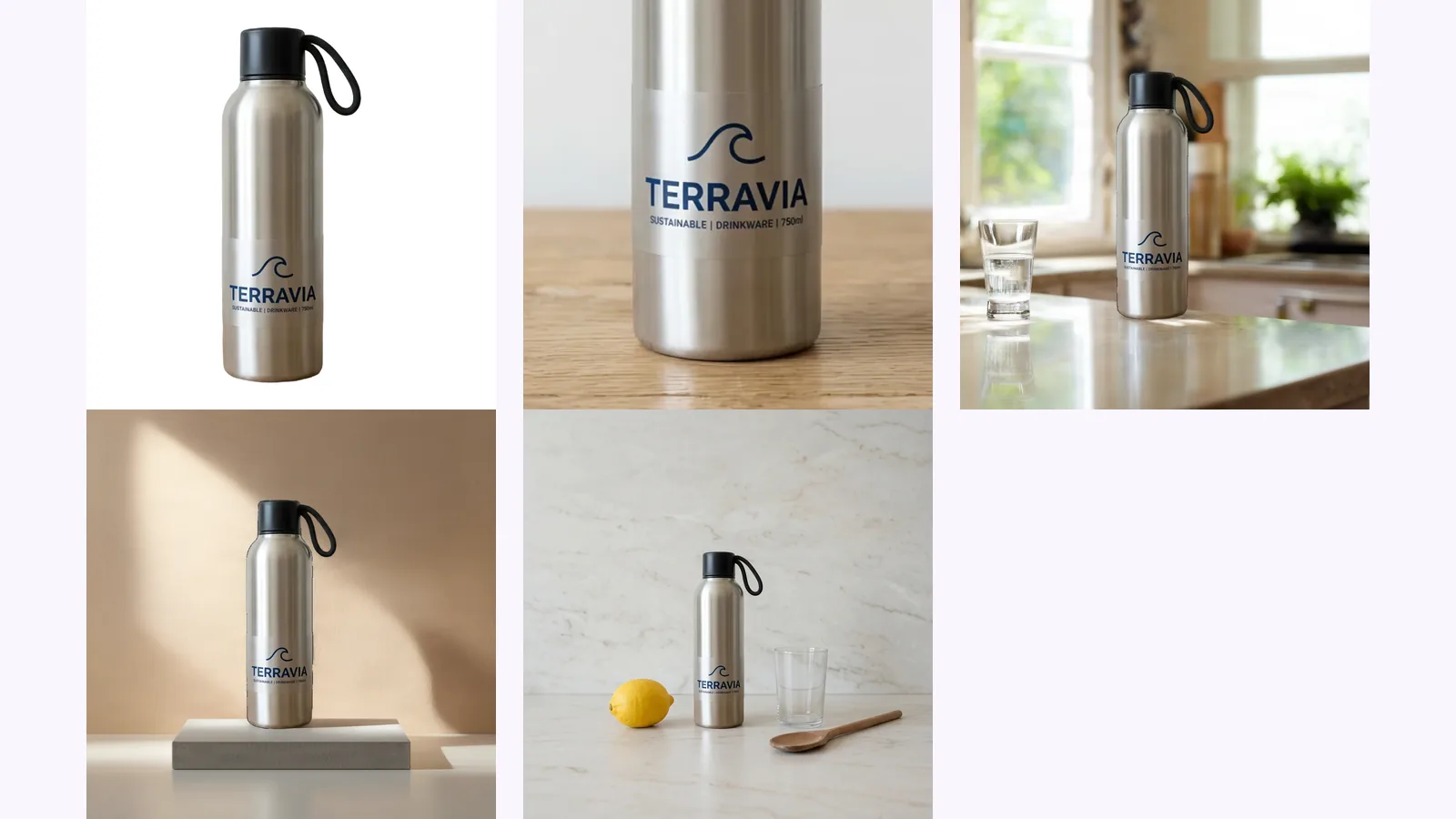
Amazon's image rules, quoted from Amazon and dated: 500–10,000 px, RGB 255 white, 85% fill, how many images a listing needs and the AI-people tag.
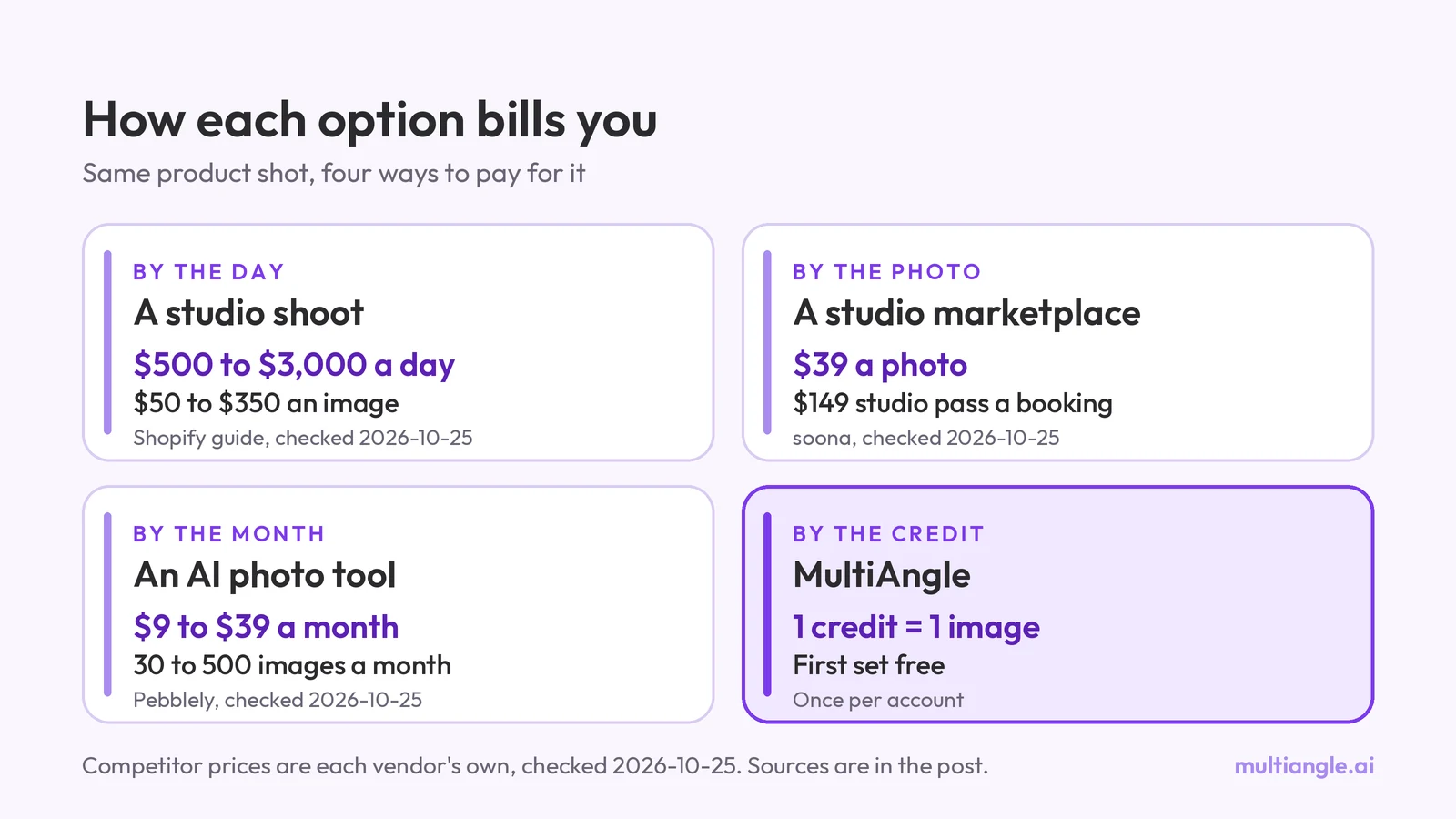
AI product photography cost against a studio shoot, with dated prices: $50–$350 an image at a studio, AI tools from $9 a month, and what credits cost.